
How to Search Morris County Court Records
Morris County court searches start with the state, not the county. New Jersey runs its case search through the New Jersey Courts Find a Case hub. The hub routes you to the right tool based on the kind of case. Civil lawsuits, foreclosures, and landlord-tenant matters use Civil Case Public Access. Indictable criminal matters use Criminal Cases Public Access. Money judgments use Judgment Search. Traffic tickets and local complaints use NJMCdirect or the municipal court. Probate filings go through the Morris County Surrogate.
Know your case type before you begin. Have the party names spelled correctly, and a docket number if you have one. New Jersey docket numbers carry a division prefix, a sequence, and a year, so the prefix alone tells you which court holds the file.
The official screenshots below come from the real state portals. The state hub points users to each public search system rather than a county-run docket site.
To find an existing case file, follow these steps:
- Identify the case type. Civil, criminal, family, probate, and municipal records live in different systems.
- Open the Find a Case hub and pick the matching tool.
- Read and accept the public-access disclaimer. The portal warns that sealed, expunged, and confidential records will not show.
- Search by docket number when you have one. If not, use an exact last name or business name, then add the county and a date range.
- Open the case jacket to view docket entries, parties, the judge, and any public documents.
- Request a certified copy from the court if you need one for legal use. A printout from the public portal is not certified.
Court staff can explain how to request a record. They cannot give legal advice or read a full file to you over the phone.
The New Jersey Courts Find a Case page is the front door for case searches in Morris County. A look at the official hub, linked from njcourts.gov, shows the separate civil, criminal, judgment, and municipal tools side by side.
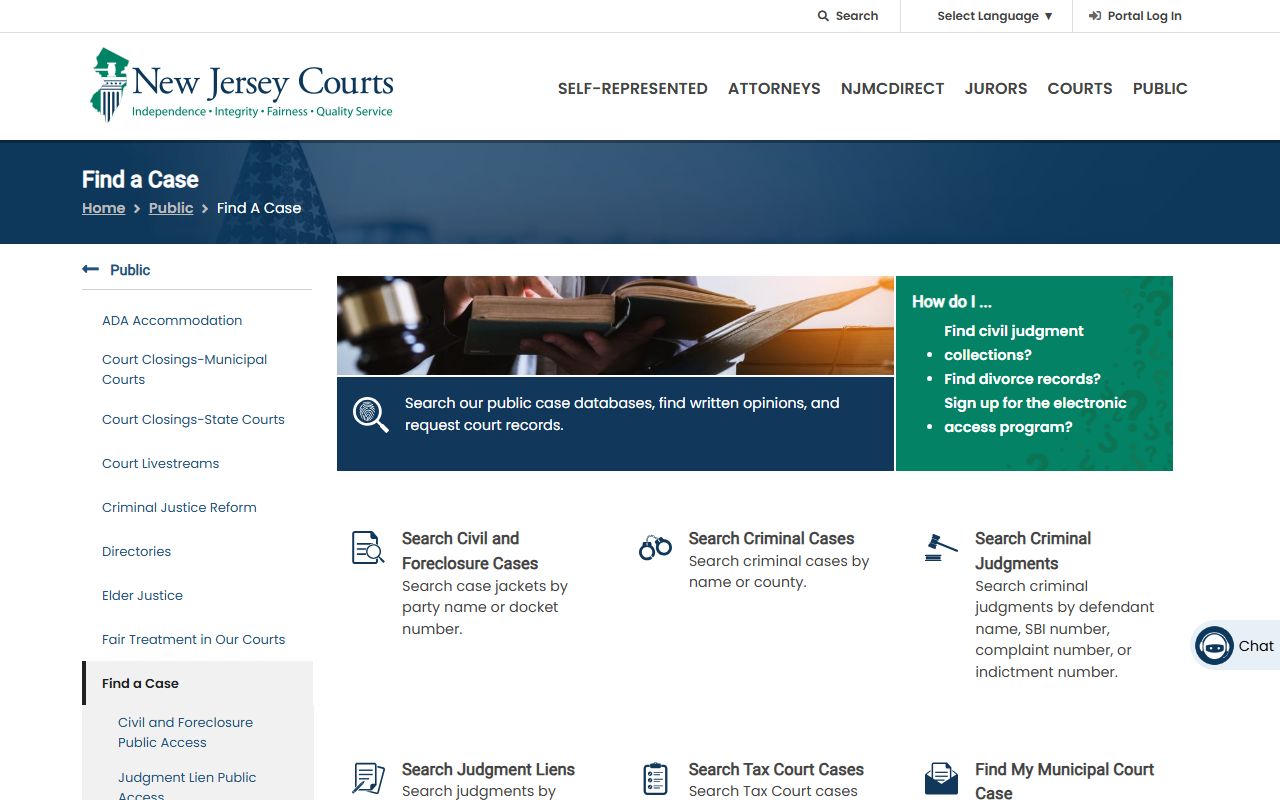
Each link on that hub opens a different public database, which is why picking the case type first saves time.
The Morris County Judicial System
Morris County belongs to Vicinage 10 of the New Jersey Superior Court, paired with Sussex County. An Assignment Judge and trial court administrators run the calendars, divisions, and court services. The main Superior Court courthouse for the county is in Morristown. Within Superior Court, cases are sorted into divisions: Civil, Criminal, Family, and Chancery or General Equity.
Above Superior Court sit the appeals courts. The Appellate Division hears appeals from the trial divisions and the Tax Court. The New Jersey Supreme Court is the final state review. Below Superior Court, Municipal Courts handle the high-volume local matters that touch the most residents.
Case flow: Municipal Court › Superior Court › Appellate Division › New Jersey Supreme Court
| Court | Jurisdiction | Case Types |
|---|---|---|
| New Jersey Supreme Court | Highest state court | Final appeals, court rules, attorney discipline |
| Superior Court, Appellate Division | Intermediate appeals | Appeals from trial divisions, Tax Court, agencies |
| Superior Court of New Jersey | General trial court | Civil, criminal, family, chancery |
| Tax Court of New Jersey | Statewide tax court | Property-tax appeals, state tax disputes |
| Municipal Courts | Local limited court | Traffic, ordinances, disorderly persons |
| Morris County Surrogate | Probate office | Wills, estates, guardianship filings |
Most people who say "Morris County court" mean the Superior Court. It hears the big civil cases, indictable crimes, divorce and family matters, and foreclosure and equity actions. Learn more on the Morris County Superior Court page.
County Clerk Versus Superior Court Clerk
New Jersey uses a split records structure, and it trips up a lot of searches. The Morris County Clerk is an elected county official. That office records deeds, mortgages, liens, and maps, runs elections, issues passports, and handles notary and trade-name services. It is a major public-record office, but its records are mostly land and county documents, not the live court docket.
Superior Court case files are different. They are held through the New Jersey Judiciary and the Superior Court Clerk and division offices. Probate is handled by the Morris County Surrogate. So a person who searches the "county clerk" for a divorce or criminal case is often looking in the wrong place. The Morris County Clerk and Clerk of the Superior Court pages explain which office holds which record.
The Morris County Clerk's official department page lists recording, passport, election, and public-document services. A view of that page, hosted at morriscountynj.gov, shows the land-record and election functions that sit apart from court case files.
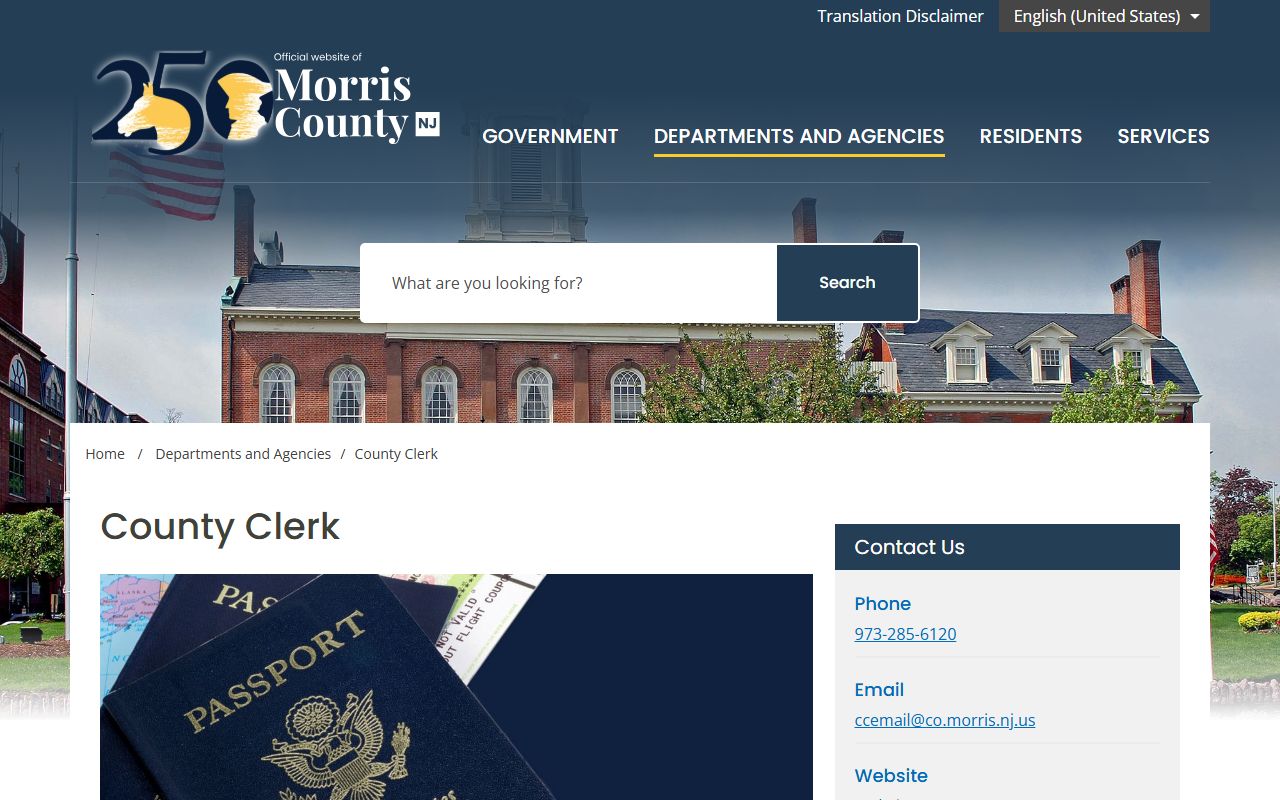
Knowing this split early saves a wasted trip to the wrong counter.
Types of Court Records Available in Morris County
Morris County court records span several case families, and each one follows its own access rules. Some are broadly open. Others are tightly restricted to protect children, victims, and health privacy. The court that produced the record usually controls how you get it.
These are the main record types residents look up:
- Criminal records - complaints, indictments, pleas, and sentencing in the Superior Court Criminal Division. See arrest records.
- Civil records - contract, injury, collection, landlord-tenant, and foreclosure files in the Civil Division.
- Family and divorce records - divorce, custody, support, and domestic violence matters; many are confidential. See marriage and divorce records.
- Probate records - wills, estates, and guardianships through the Surrogate's Court.
- Traffic records - tickets and local complaints in Municipal Court.
Older files may not be online. For those, court records staff or an archive request may be needed.
What Morris County Court Records Show
A court record is built from a set of standard fields. Once you know the fields, a docket reads much faster. The header names the case. The entries track every filing and event in order. The disposition tells you how it ended.
| Field | What It Shows |
|---|---|
| Docket Number | Division prefix, sequence, and year that identify the case |
| Filing Date | Date the complaint or charging paper was filed |
| Parties | Plaintiff, defendant, petitioner, respondent, or estate |
| Charges / Cause | Offense and statute, or the civil claim |
| Disposition | Dismissal, plea, conviction, judgment, or settlement |
| Sentence / Judgment | Fines, probation, jail term, or money award when public |
Personal identifiers are redacted. Social Security numbers, account numbers, full birth dates, minor names, and confidential addresses do not appear in the public view.
Public Access Laws for Morris County Court Records
New Jersey has a two-key access system, and mixing them up is a common mistake. County department records fall under the Open Public Records Act, known as OPRA. Court case records fall under a court rule instead, mainly Rule 1:38. So an OPRA request to the county is not the normal way to get a Superior Court complaint or a divorce judgment. Court records go through the judiciary; county department records go through the county OPRA custodian.
Several statutes and rules shape what shows in a search. Sensitive records are protected even when the main case is public.
Key Statutes:
N.J.S.A. 47:1A-1 (OPRA) - declares that government records are readily accessible, with exceptions for privacy and safety.
New Jersey Court Rule 1:38 - the main rule on public access to court records, including what is open, what is excluded, and how to seal.
N.J.S.A. 2C:52-1 et seq. (Expungement) - removes eligible criminal, ordinance, and juvenile records from ordinary public access.
The Government Records Council explains OPRA rights and timelines for county records. Its public guidance, at nj.gov/grc, walks through how to file and how to challenge a denial.
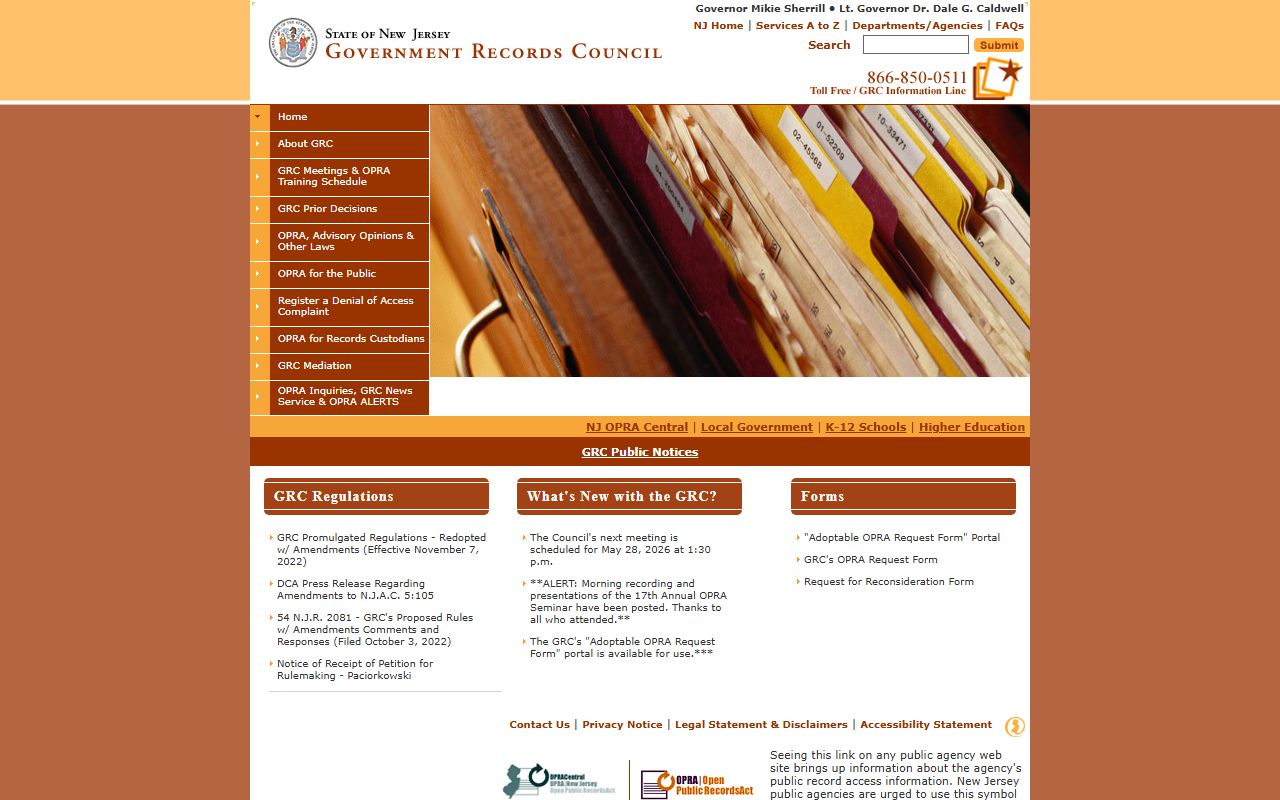
For court files, the request process runs through the judiciary, not the county OPRA custodian. More detail sits on the public records page.
Records That Are Restricted or Confidential
Not every court record is open. New Jersey shields whole categories to protect people. Juvenile delinquency files are confidential. Adoption records are sealed. Domestic violence records are protected for victim safety. Mental-health and civil-commitment files keep medical details private. Expunged cases are removed from ordinary public access, and sealed records show little or nothing to the public.
To view a sealed record, a person usually must file a motion that explains the need and the harm from disclosure. A judge decides whether the legal standard is met. Expungement is a separate court process under New Jersey law, and once granted it pulls the case from public portals and standard criminal-history checks.
Specialty Courts in Morris County
Morris County takes part in the state's problem-solving court programs through Vicinage 10. The best known is Recovery Court, the statewide successor to drug court. It is a court-supervised treatment track for eligible defendants whose substance use is tied to their charges. It uses close supervision, regular court reviews, treatment, drug testing, and graduation requirements. Public criminal dockets may show program status or violation events, but the treatment records themselves stay private.
Behavioral-health needs are handled through several diversion and treatment paths. Cases may involve competency evaluations, civil commitment, pretrial services, and county treatment providers. Veterans can reach treatment and diversion help through the court, the prosecutor, the public defender, probation, and county veterans services. Sensitive evaluations and treatment plans are not open to the public.
Morris County Sheriff and Jail
The Morris County Sheriff's Office is the main county law-enforcement office, and it runs the county jail. Sheriff James M. Gannon leads the office as the 77th Sheriff of Morris County. The office splits into a Bureau of Law Enforcement and a Bureau of Corrections. The law-enforcement side covers courthouse security, inmate transport, service of process, restraining-order service, and foreclosure functions. The corrections side runs the Morris County Correctional Facility at 43 John Street in Morristown.
For roster and custody details, see Morris County inmate records. For active warrants, see the warrant records page. To confirm a release, see released inmates.
The Sheriff's Office About page identifies the sheriff and the bureau structure. The official page, at morriscountynj.gov, ties the office's court work to courthouse security and inmate movement.
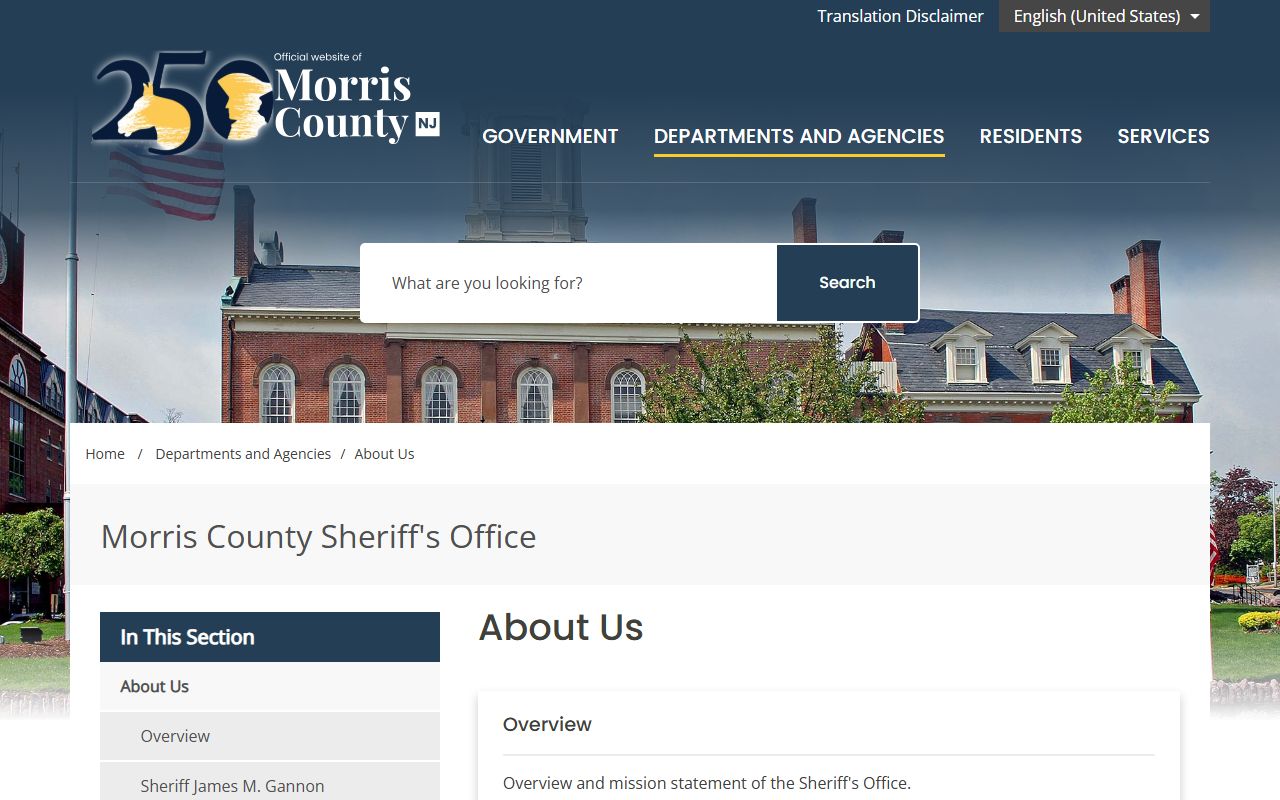
Because the Sheriff serves restraining orders and writs, the office touches court records even when no inmate is involved.
Marriage, Divorce, and Surrogate Records
Marriage licenses in New Jersey come from local municipal registrars, not the court. Divorce is different. A divorce is a Superior Court Family Division case, and the file is a court record with strong confidentiality limits. Probate runs through the Surrogate. See marriage and divorce records and probate records for full detail.
Probate has its own vocabulary. A few key terms:
- Testator
- The person who made the will.
- Executor
- The person named in a will to settle the estate.
- Administrator
- The person appointed to settle an estate when there is no will.
- Intestate
- Dying without a valid will.
Morris County Court Records Fees
Copy and certification fees are set by the office that holds the record. Court-copy and certification charges follow Judiciary schedules. County Clerk recording and copy fees follow the Clerk's own schedule. Always confirm the current amount with the office before you pay, because fee schedules change.
| Item | Where the Fee Is Set |
|---|---|
| Court record copy | New Jersey Judiciary copy schedule; confirm current amount |
| Certified court copy | Judiciary certification schedule; certification adds a charge |
| Recorded document copy | Morris County Clerk fee schedule |
| OPRA copy | Statutory OPRA charges; electronic delivery may avoid per-page fees |
Fee waivers may be available to qualifying litigants through NJ Courts fee-waiver forms.
How to Interpret Morris County Court Records
Docket prefixes tell you a lot at a glance. An L prefix is a Law Division civil case. DC is the Special Civil Part, and SC is Small Claims. F is foreclosure. FM is a divorce or dissolution case, and FV is domestic violence. Criminal cases use indictment, accusation, or complaint numbers.
Watch the difference between a charge and a conviction. A charge is an accusation. A conviction is a finding or plea of guilt. A dismissal means the matter ended without a conviction. A disposition is simply the outcome, whatever it was.
Note: Always confirm a charge, disposition, or custody status with the originating court before you rely on it, because portal data can lag behind the file.
History of Morris County Courts
Morris County is one of New Jersey's older counties, and Morristown has been its legal center for generations. The county's legal history is tied to Morristown's colonial and Revolutionary War prominence. Early county court sessions grew into the modern Superior Court structure as the state unified and modernized its courts.
The 1947 state constitution and later reforms pulled the trial courts under the Superior Court system. Today the county's court administration runs through Vicinage 10 with Sussex County. The courthouse district around Washington Street and the Morristown Green reflects that long civic history rather than a new suburban justice center.
Frequently Asked Questions
How do I search Morris County court records online?
Start at the New Jersey Courts Find a Case page, not a commercial site. Pick the tool that matches your case. Civil Case Public Access covers civil and chancery matters. Criminal Cases Public Access covers Superior Court criminal cases. Judgment Search covers docketed judgments. NJMCdirect covers many traffic tickets. Probate starts with the Morris County Surrogate. For a certified copy, use the court that keeps the official record.
Is the Morris County Clerk the same as the Clerk of Court?
No. The Morris County Clerk handles land records, county documents, passports, elections, and notaries. Superior Court case records are handled through the New Jersey Judiciary and the court division offices. Probate matters go through the Morris County Surrogate. This split is one of the most important things to get right, because a "county clerk" search often leads people to the wrong office for divorce or criminal records.
Does Morris County publish a jail roster?
The official county pages reviewed do not show a full public live jail roster. To verify custody, use the Morris County Correctional Facility official contact, VINELink, NJ Courts case records, NJDOC for sentenced state prisoners, or the Bureau of Prisons for federal inmates. Avoid commercial inmate-search sites that are not official custody sources.
More answers are on the Morris County Court Records FAQ page.