
The Morris County Clerk's Office
The Morris County Clerk is Ann F. Grossi, Esq., who leads the office as an elected county official. The office sits in the Hall of Records Administration Building in downtown Morristown. It is a high-volume public-record office, but its records are mainly real property and county documents, not the live court docket.
Morris County Clerk
Hall of Records Administration Building
10 Court Street, PO Box 315
Morristown, NJ 07963-0315
973-285-6120
Mon-Fri, 8:00 a.m. to 4:30 p.m.
The official County Clerk page lists the office's recording, passport, election, and public-document services. The page sits at morriscountynj.gov.
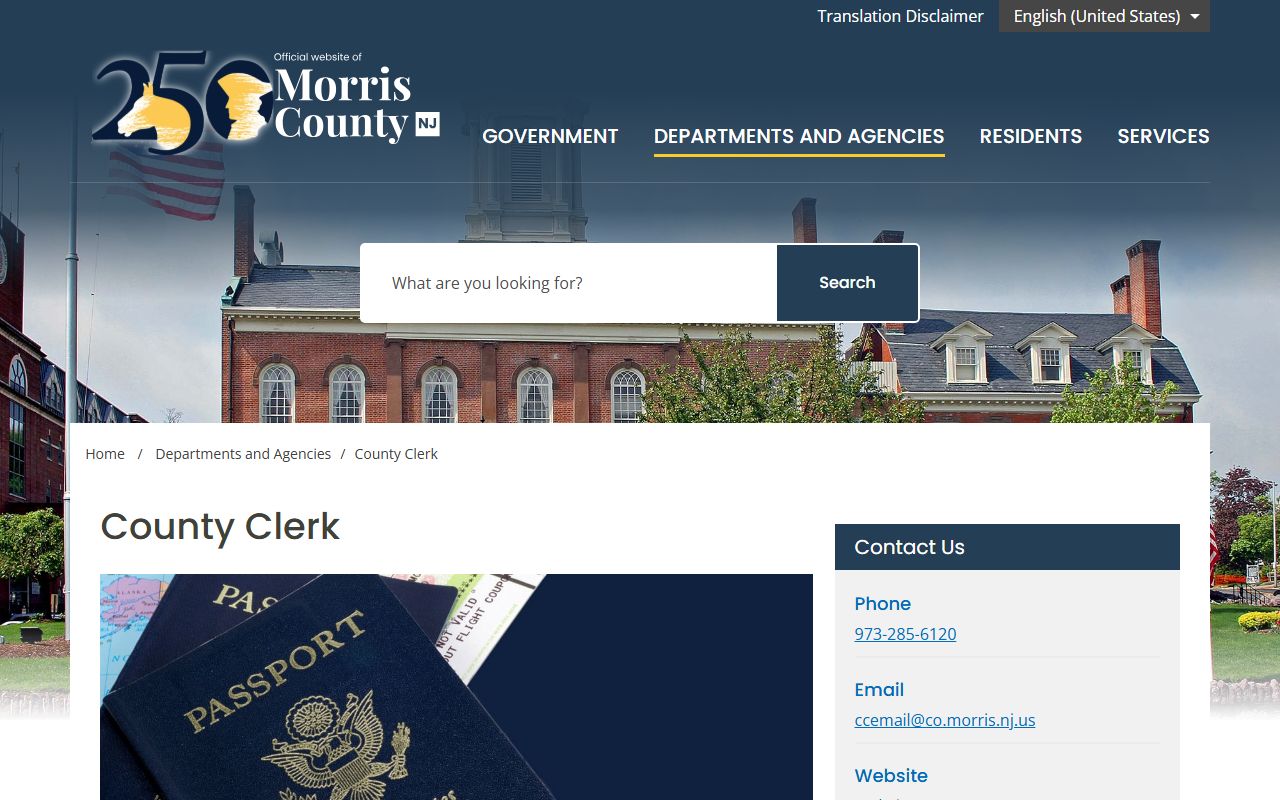
The published office hours are Monday through Friday, and the office is closed on weekends.
County Clerk Versus the Court
This is the split that confuses most searches. The County Clerk holds land and county records. The court holds case files. A person looking for a divorce or a criminal case at the County Clerk is in the wrong office.
| Point | Morris County Clerk | The Courts |
|---|---|---|
| Holds | Deeds, mortgages, liens, maps, elections | Civil, criminal, family, probate case files |
| Use for | Land records, passports, notaries | Court records and certified case copies |
| Where | Hall of Records, Morristown | Superior Court, Surrogate, Municipal courts |
Court case files run through the Clerk of the Superior Court, and probate through the Surrogate's Court.
Searching Recorded Land Records
The County Clerk offers online access to recorded documents through a public records portal. You can search by name, document type, instrument number, or book and page. Property searches can also use municipality, block, and lot. The index search is free, though viewing or printing images may depend on portal functions and fee rules.
| Field Label | Type | Required | Notes / Format |
|---|---|---|---|
| Name | Text | For name search | Grantor or grantee, last name or entity |
| Document Type | Dropdown | No | Deed, mortgage, assignment, discharge, lien, map |
| Date Range | Date | No | Recording date range to narrow common names |
| Instrument Number | Text | No | Direct lookup if known |
| Book / Page | Text | No | Older records may use book and page |
| Municipality / Block / Lot | Text | No | Tax-map identifiers for property searches |
For a county overview, the Morris County government homepage links to the Clerk and other departments.
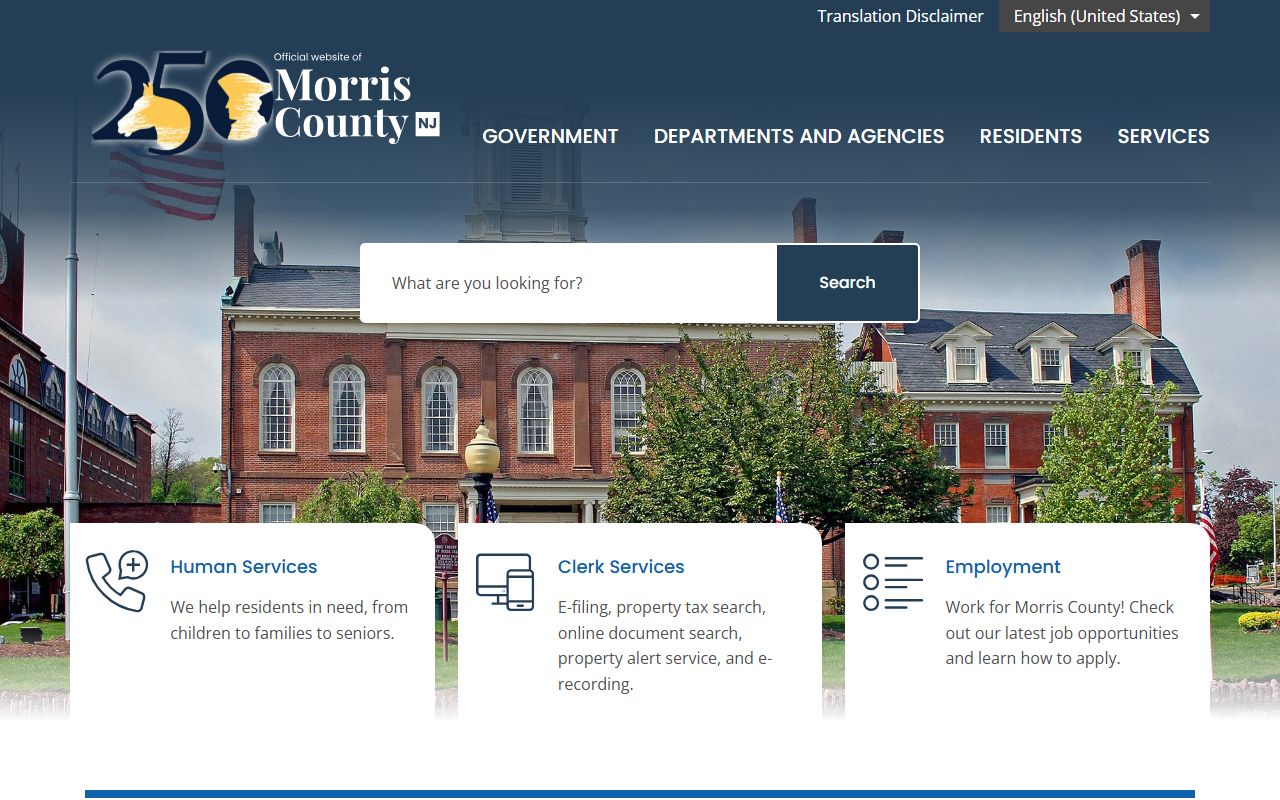
From there, the County Clerk department page leads to the records-search portal.
What a Recorded Document Shows
A recorded-document record carries the details that identify a property filing. The exact fields depend on the document type, but most include:
- Document type, such as deed, mortgage, discharge, assignment, or lien.
- Instrument number and, for older records, book and page.
- Recording date and time accepted for recording.
- Party names, such as grantor and grantee or mortgagor and mortgagee.
- Municipality and block, lot, and qualifier when indexed.
- Consideration, page count, and recording fees when shown.
Protected identifiers such as Social Security numbers should be redacted when present.
Land Record Terms Explained
Recorded documents use words that are specific to property filings. A short glossary makes an index search easier to read:
- Grantor
- The party transferring an interest, such as a seller on a deed.
- Grantee
- The party receiving the interest, such as a buyer.
- Mortgagor
- The borrower who pledges property to secure a loan.
- Discharge
- A recorded release showing a mortgage or lien is paid off.
- Lis pendens
- A notice that a lawsuit may affect the title to a property.
Knowing whether you are the grantor or grantee on a document helps you pick the right name search.
Older and Historical County Records
Not every record is recent. Older deeds, maps, and county documents may use book and page references rather than instrument numbers, and some may not be in the online index. For those, the Clerk's office can help, and a deeper historical search may reach the state archives.
The New Jersey State Archives county records guide explains which historical county records the state holds. Genealogists and title researchers often use it for old land and county files that predate the online portal.
How to Request a Certified Copy
A plain index result is not a certified copy. For an official certified document, follow the Clerk's procedure. The steps are simple once you have located the record.
- Search the records portal to find the document by name, type, or instrument number.
- Note the instrument number or the book and page reference.
- Request a plain or certified copy through the Clerk's process.
- Pay the copy or certification fee from the official Clerk schedule.
- Receive the copy by the method the office offers.
Certified copies require the Clerk's certification, so confirm the current process and fee before you submit a request.
Recording, Passports, and Other Services
The Clerk does more than search index records. Recording is the core function, and every deed, mortgage, assignment, discharge, lien, and subdivision map affecting county real estate may pass through the office. The Clerk also provides passport acceptance under federal rules, processes notary-related functions under state law, and handles trade-name and veterans identification services.
Passport applicants need U.S. Department of State forms, identity and citizenship proof, photographs, and separate federal fees, often by appointment. Recording fees follow the official County Clerk recording-fee schedule rather than a title-company summary.
Elections and Marriage Records
Election work is a major County Clerk duty. The office handles ballot preparation, sample ballots, nominating petitions, mail-in ballot administration, and election-night reporting and certification. That work is seasonal but intensive, and it is separate from court-record functions.
The Clerk also officiates some marriage ceremonies and may help with certain older county marriage records. Even so, current marriage licensing and certified vital records are mainly municipal registrar and state functions, as explained on the marriage and divorce records page.
County Clerk Fees
Copy and recording fees are set by the County Clerk schedule and by statute. Confirm the current amount on the official page before you pay, since recording fees have several components.
| Item | Fee / Note |
|---|---|
| Plain copy of recorded document | Official County Clerk fee schedule |
| Certified copy | Requires Clerk certification; per official schedule |
| Recording a deed or mortgage | Statutory and county fee components; use the recording-fee page |
| Passport execution | Federal acceptance-facility rules plus county appointment |
| OPRA copy | Statutory OPRA charges; electronic delivery may avoid per-page fees |
County department records, separate from recorded land documents, are requested through the county OPRA process on the public records page.