
The Superior Court Clerk in Morris County
New Jersey uses a split records structure, and it is the single most useful thing to understand here. The Morris County Clerk is an elected county official who records deeds and runs elections. The Clerk of the Superior Court, working with the court division managers, handles the actual court case files. These are two different offices with two different jobs.
Morris County's Superior Court business runs through the Morris/Sussex Vicinage, Vicinage 10, based in Morristown. The court division offices, with the statewide Superior Court Clerk, keep civil, criminal, family, and judgment records. So a request for a case file goes to the court, not the county clerk's recording counter.
Superior Court of New Jersey
Morris County Courthouse
56 Washington Street
Morristown, NJ 07960
Vicinage 10 (Morris/Sussex)
What the Clerk of the Superior Court Handles
The court side keeps the records most people mean when they say "court records." That includes the trial division case files and the statewide judgment system. The office processes filings, maintains case jackets, issues certified copies, and manages court-record requests.
The main record types on the court side include:
- Civil case files, including contract, injury, collection, and foreclosure matters.
- Criminal case files for indictable offenses.
- Family Division files such as divorce, custody, and support, many confidential.
- Docketed judgments and liens in the statewide judgment system.
Search detail for each of these sits on the court records and court dockets pages.
County Clerk Versus Superior Court Clerk
The two clerks are easy to confuse, so a side-by-side comparison helps. One holds land and county records. The other holds court case files.
| Point | Clerk of the Superior Court | Morris County Clerk |
|---|---|---|
| Holds | Civil, criminal, family, judgment case files | Deeds, mortgages, liens, maps, elections |
| Use for | Court case records and certified copies | Land records, passports, notaries |
| Governed by | Court rules, including Rule 1:38 | OPRA and recording statutes |
The land-record side is covered in full on the Morris County Clerk page. Use that office for a deed or a recorded lien.
How to Request a Certified Copy
A printout from a public portal is not certified. For an official version used in legal proceedings, you request certification from the court that holds the record. The process is straightforward when you have the case details ready.
- Identify the case by docket number, parties, and approximate year.
- Confirm which division holds the file: civil, criminal, family, or judgment.
- Use the NJ Courts records-request process or contact the division for Morris County.
- Specify the documents and the copy type, such as plain or certified.
- Pay the copy and certification fee, or apply for a fee waiver if eligible.
- Receive the certified copy by the delivery method you selected.
Fee-waiver forms for qualifying litigants are on the NJ Courts fee-waiver page.
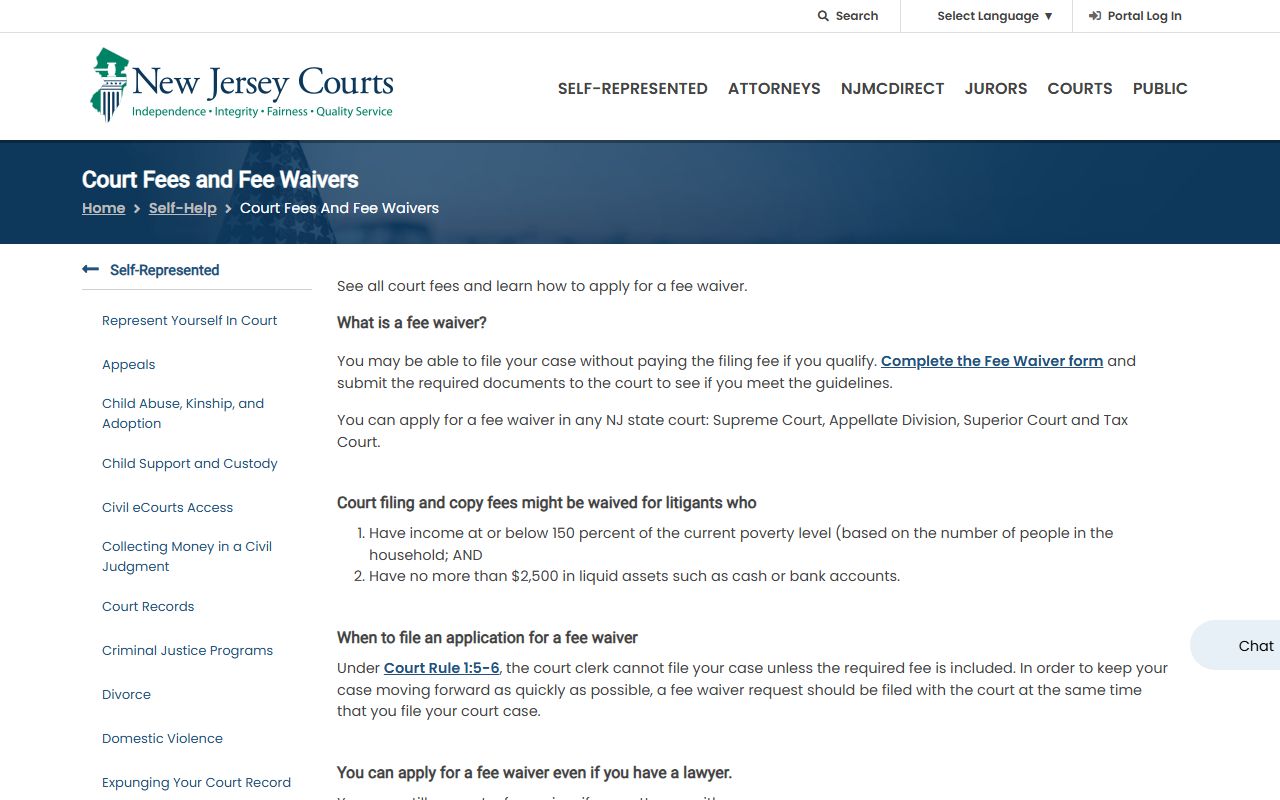
A waiver covers certain filing costs but not every copy or outside charge, so ask the clerk which fees a waiver will and will not cover.
Records Request Form Fields
The judiciary records-request form collects the details staff need to find and release a record. The clearer the request, the faster the response.
| Field Label | Type | Required | Notes / Format |
|---|---|---|---|
| Requestor name / contact | Text | Yes | Used for the records staff response |
| Court / county | Dropdown | Yes | Select Morris County or the vicinage |
| Case type / division | Dropdown | If known | Civil, Criminal, Family, Municipal, Tax |
| Docket or complaint number | Text | No | Direct lookup if known |
| Documents requested | Textarea | Yes | Complaint, order, judgment, transcript |
| Copy type | Checkbox | No | Plain, certified, or exemplified |
| Fee acknowledgment | Signature | If copies requested | Payment may be required before release |
Online case search through the NJ Courts portal is covered on the court records page.
Fees for Copies and Certification
Court-copy and certification fees follow Judiciary schedules, not the county OPRA fee rules. Certified, exemplified, or sealed records may require extra fees and, in some cases, judicial approval. Confirm the current amount before you pay.
| Item | Where the Fee Is Set |
|---|---|
| Plain court record copy | NJ Judiciary copy schedule |
| Certified copy | Judiciary certification schedule |
| Exemplified copy | Judiciary schedule; may need approval |
| Fee waiver | Available to qualifying litigants |
Land-record copy fees are different and follow the County Clerk schedule, as noted on the Morris County Clerk page.
Online Case Access Through NJ Courts
Much of what the Superior Court Clerk maintains can be searched online first. The NJ Courts Find a Case hub routes you to Civil Case Public Access, Criminal Cases Public Access, and Judgment Search. You can identify a case and its docket number online, then request a certified copy from the clerk.
This order saves time. Find the case first, note the docket number and division, then make a targeted request. The court records page walks through each portal step by step.
When You Need a Certified Copy
Most everyday searches do not need a certified copy. A public portal view is enough to confirm a case status or read a docket. But certain uses require the official, certified version that carries the court's seal.
Common situations that call for a certified copy include:
- Filing a divorce judgment with another agency or for a name change.
- Proving a disposition for immigration, licensing, or housing.
- Enforcing or satisfying a docketed judgment.
- Submitting a court record in another state, where an exemplified copy may be required.
An exemplified copy is a higher level of certification used when a record will be presented in another jurisdiction. The clerk can explain which level fits your purpose, though staff cannot tell you whether to file or how to use the document.
Records the Clerk Cannot Release
The clerk follows the same access rules as the rest of the court. Some records are not released to the public at all. Juvenile, adoption, domestic violence, mental-health, sealed, and expunged records are restricted under court rules and statutes. Personal identifiers are redacted from public files under Rule 1:38.
So even a valid request will not produce a confidential family or juvenile file unless you are an authorized party or you have a court order. Sealing and expungement are separate court processes, and once a record is sealed or expunged the clerk will not release it to ordinary searchers. The court records page lists the restricted categories in more detail, and the arrest records page explains expungement.